

Personalized medicine: An earlier asthma diagnosis could bring relief
St. Gallen / Zürich, 17.09.2026 — Although asthma is the most common chronic condition in childhood, current tests can only diagnose it from the age of five. However, an early asthma diagnosis would be important to prevent long-term complications. Researchers from Empa and the University Children’s Hospital Zurich have now launched a joint research project – with the aim of developing a novel diagnostic protocol so that babies and young children can also receive a reliable diagnosis as early as possible. The project is being carried out thanks to generous funding from various foundations.
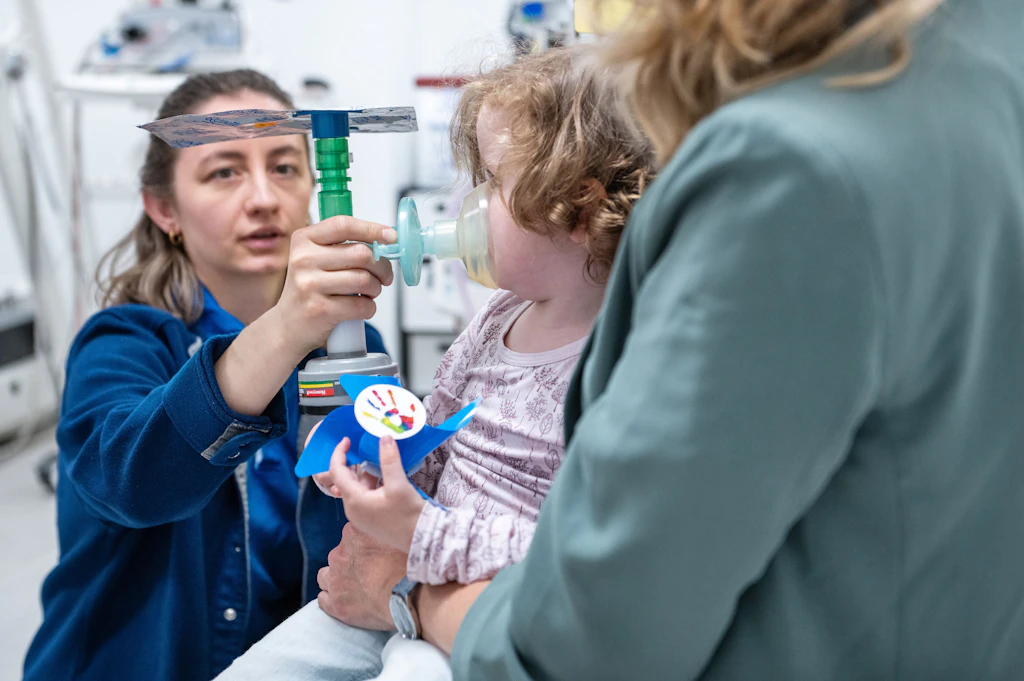
“Take a deep breath and blow as hard as you can into a tube.” What sounds simple for adults is a difficult task for a toddler. For a baby, it is downright impossible. Yet to diagnose asthma, doctors currently have no choice but to rely on tests that require these instructions to be followed. Babies and young children suspected of having asthma therefore inevitably remain without a clear diagnosis until the age of five. According to Alexander Möller, Senior Consultant in Pneumology at the University Children’s Hospital Zurich (Kispi), this creates a risk that these children will not receive the correct treatment: “If their asthma remains untreated, there is a high risk of more frequent and severe asthma attacks, and the chronic inflammation can lead to scarring that restricts lung function,” says Möller. “If, on the other hand, the children do not have asthma but, for example, bronchitis, yet are still given asthma medication, this can in some circumstances lead to significant side effects, such as for example, stunted growth.” Pediatrics therefore urgently need a way to make a correct early diagnosis.
New research project builds on previous research
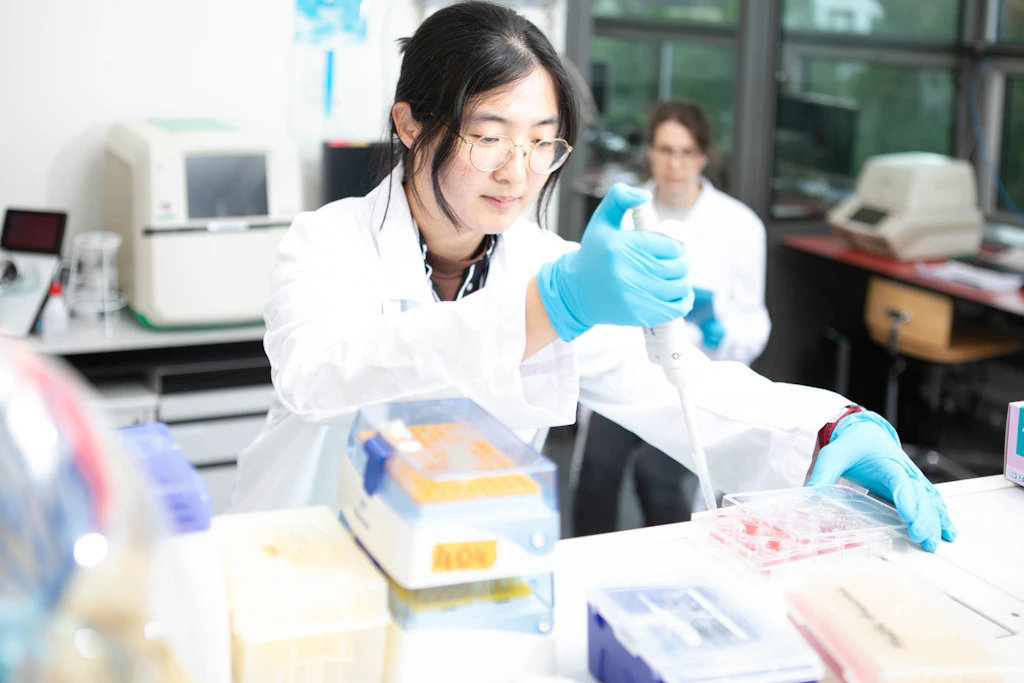
Previous research into asthma has shown that the complex composition of the air we breathe reflects the inflammatory changes associated with asthma in the lungs. Furthermore, it has already been scientifically proven that asthma also has a strong genetic component. Empa and Kispi now intend to build on these findings in a joint research project. The two institutions complement each other perfectly: Empa’s Multi-Omics for Healthcare Materials research team, led by Marija Buljan, possesses extensive expertise in statistical analysis and the molecular mechanisms underlying disease development. Alexander Möller’s research group at Kispi contributes expertise in breath analysis and clinical experience.
The joint research project is based on a so-called multi-omics approach, which investigates the development and severity of asthma at various molecular and genetic levels. The aim of the project is to develop a novel diagnostic protocol that enables non-invasive and pain-free asthma diagnosis, even in babies and young children. This protocol is to consist of two components: a buccal swab for DNA analysis and a breath analysis using mass spectrometry.
Molecular ‘traces of asthma’ in exhaled air
The two research teams have planned the research project to run for four years and have divided it into five phases. The first two phases aim to identify molecules typical of asthma in exhaled air and assess whether these can support a diagnosis. To this end, Kispi is recruiting 180 children aged between two and four for a prospective longitudinal observational study, comprising 120 with recurrent respiratory symptoms and 60 healthy children for the control group. These children breathe into a special bag so that their exhaled air can be analyzed in a specialized instrument, a high-resolution time-of-flight mass spectrometer. To identify and classify the specific molecules within the vast amounts of data generated, Kispi researchers have developed a machine learning model. Based on the findings, they predict whether or not the children will later be diagnosed with asthma. “Once they reach the age of five, we verify this prediction using the established diagnostic protocol,” adds Alexander Möller.
Search for asthma gene variants
The later phases of the project will focus on identifying genetic variants associated with asthma, with the aim of creating a so-called gene panel. This would be a cost-effective method to support the diagnosis of asthma: “Once a gene panel is in place, there is no need to examine the entire genome; instead, can specifically search for the presence of certain asthma-associated gene variants in a patient,” explains Marija Buljan.
To identify these genetic variants, the Empa researchers are developing a computer model that maps cellular signaling pathways. The focus is on specific immune cells that are involved in triggering symptoms in the vast majority of children with asthma. “The map of cellular signaling pathways shows us which messenger substances lead to the activation of these cells and what changes occur in the cells following contact with the messenger substances,” explains Marija Buljan. To validate that they have identified the correct cellular processes, the researchers then conduct laboratory experiments with the cells, thereby identifying the genes that play a central role.
The ultimate goal is to compile a definitive list of asthma gene variants. To this end, a mouth swab is taken from a dozen parent-child pairs who have already been diagnosed with asthma, which the researchers use to check whether these gene variants are actually present. The gene panel is ultimately created on the basis of these results.
A quantum leap for pediatric pulmonology
If the research project proves successful, it would solve a huge problem worldwide: “That would be a quantum leap for pediatric pulmonology,” emphasizes Alexander Möller. “With an early diagnosis, we could largely relieve affected toddlers of their asthmatic symptoms and prevent hospital admissions. At the same time, it would minimize the risk of non-asthmatic children being unnecessarily prescribed cortisone.” Moreover, the research project could pave the way for the development of novel asthma medications. “A better understanding of the cellular mechanisms underlying asthma could serve as a basis for developing targeted and well-tolerated medications,” says Marija Buljan.
The first priority, however, is to successfully complete the ongoing project on early asthma diagnosis. It is expected to take another five to ten years before the new diagnostic protocol is finalized and established in pediatric medicine.
The research project is being carried out thanks to generous funding from the Blumenau-Léonie Hartmann Foundation, the Thomas and Doris Ammann Foundation and two other foundations.
What is asthma?
Asthma is a chronic, inflammatory condition of the airways that causes acute breathing difficulties following exposure to certain triggers. Triggers can include viral infections, stress, cold air, exhaust fumes, cigarette smoke or allergens such as house dust. Typical signs of an asthma attack include shortness of breath, wheezing when breathing out, a tightness in the chest and a dry cough. Although asthma disappears in adolescence in 30 to 50 per cent of children, it is fundamentally incurable. Current treatment is largely limited to managing symptoms using inhaled corticosteroids. As a general rule, the earlier treatment begins, the better the chronic inflammation can be suppressed and the better the risk of long-term damage can be avoided.
Zukunftsfonds
Empa's Zukunftsfonds is looking for private funding for outstanding research projects and talents that are not (yet) supported elsewhere. More information can be found here: Empa - Zukunftsfonds.
Further Information
Dr. Marija Buljan
Empa, Nanomaterials in Health
Phone +41 58 765 7908
marija.buljan@empa.ch
Prof. Dr. med. Alexander Möller
University Children's Hospital Zurich
Phone +41 44 249 5752
alexander.moeller@kispi.uzh.ch